SHADOW IT
Shadow IT now looks like a working app on someone's laptop.
Ops, finance and product people now build working apps with AI in an afternoon. Software used to enter a company through one door. Now there are many doors, and most of them are invisible to IT.
WHY A BAN FAILS
Why banning does not work
The self-built tool is often better for the job than the official system, and the official route feels like homework. People route around a ban.
The useful move is a path that is easier than the laptop, and still visible to IT.
WHAT IT NEEDS
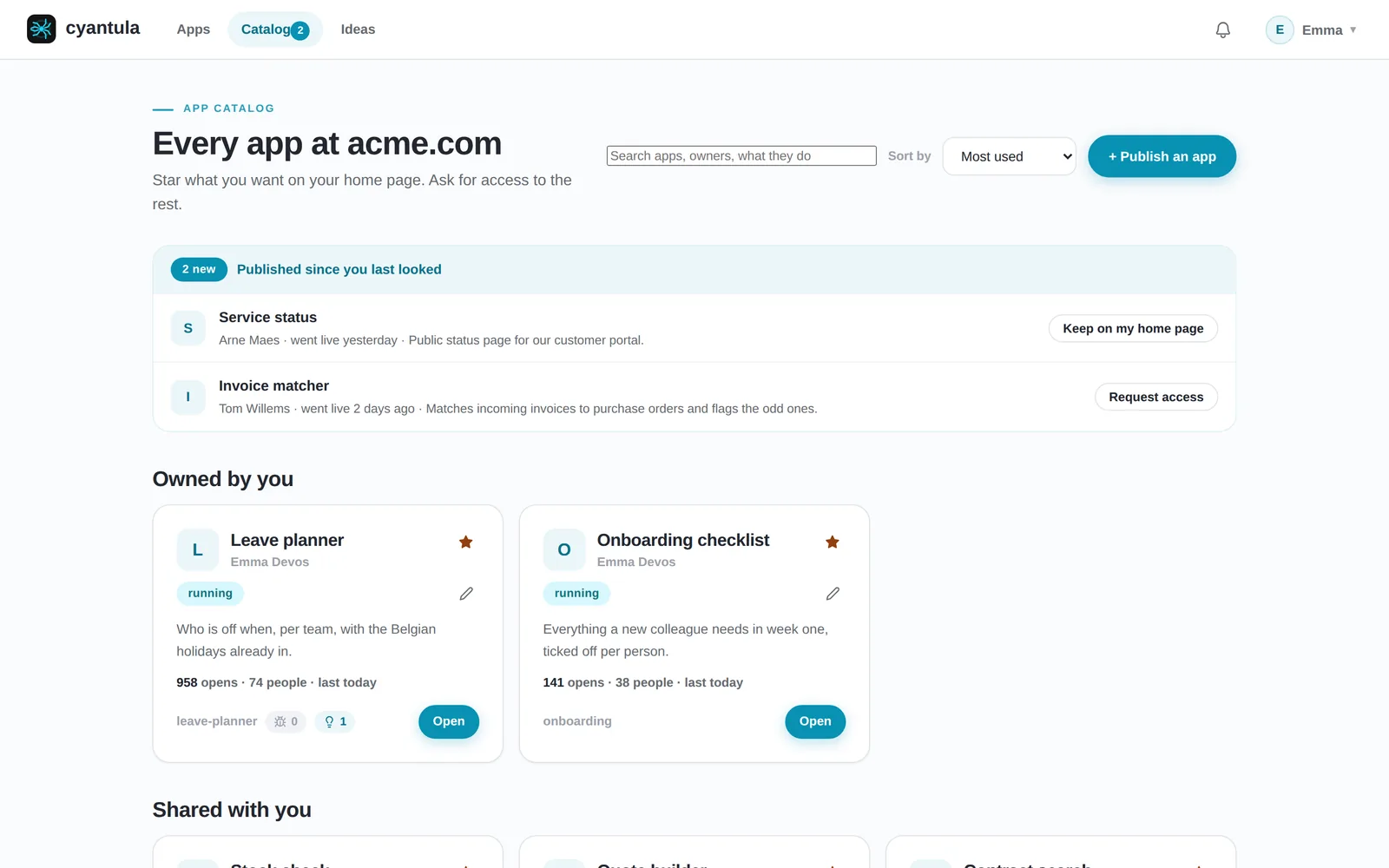
What IT actually needs to know about each app
- Who built it, and who owns it.
- Who can open it.
- What data and systems it touches.
- Where it runs.
- Whether anyone still uses it.
APPROVAL
What IT approval can look like without a review queue
IT cannot review every app by hand. Set the rules once: company login in front, keys held centrally, and an owner per app. Let owners approve access and changes. Give IT one view over everything.
Access control is the login in front. Running internal tools is uptime, backups and what happens to apps nobody opens.
THE LIGHTER PATH
Make the paved path lighter than the shadow path
If publishing safely takes as little effort as copying a folder, people use it. If it takes Dockerfiles and tickets, they do not.
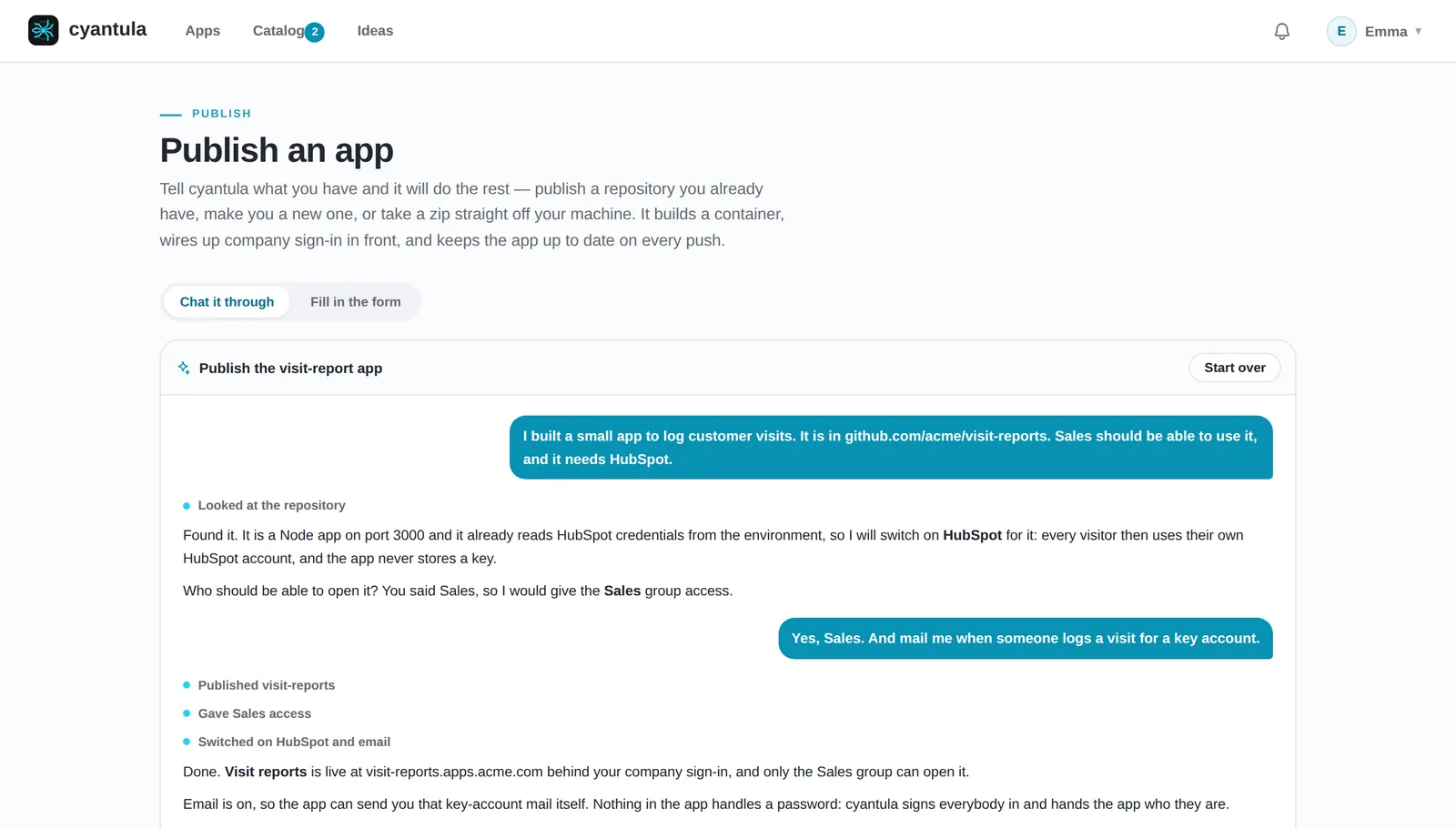
Publishing in cyantula is a URL, a zip or a conversation.
FIRST WEEK
A first-week plan for an IT lead
Ask teams which tools they built
Start with what already exists, not with a new policy document.
Pick the three that touch real data
Those are the ones worth moving first.
Put them behind the company login, with a named owner
Your existing company login (Google Workspace today), and a person who is responsible.
Move their keys out of the app
Mail, chat and business systems should not leave a key in a file.
Decide what happens with tools nobody opens
Ask the owner whether a quiet tool can be archived.
ONE DOOR
How cyantula gives IT one door
One door for every app. Your existing company login (Google Workspace today) sits in front, and the app runs on your own infrastructure behind it. cyantula can also host it for a fixed monthly fee.
Publishing is a URL, a zip or a conversation. A catalog lists every app with its owner. Per-app access lists are there for IT to read. Every app has an audit trail, uptime and usage, including the ones nobody opens. Proposed changes wait for the owner.
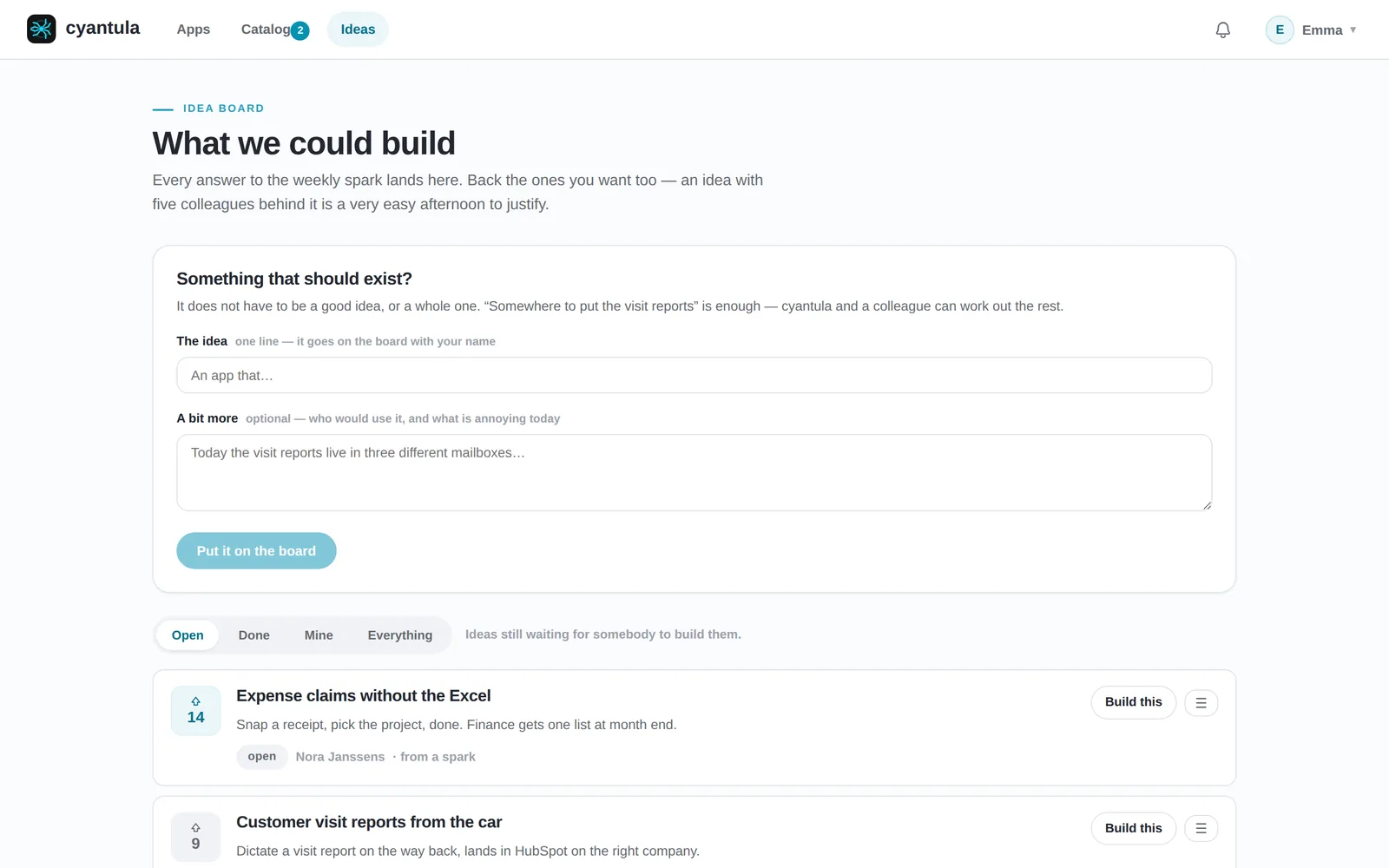
One weekly question goes to each person, and an idea board turns the answers into apps through the same path. What the platform does is the longer tour of that door.
Frequently asked questions
Is vibe coding shadow IT?
It becomes shadow IT when the app runs outside anything IT can see. The answer is a visible path, not a ban.
How can IT approve internal apps without reviewing every one?
Set the rules once in the platform, let the owner approve access and changes per app, and give IT one overview of everything.
Where does the app run?
On your own infrastructure by default, or hosted by cyantula for a fixed monthly fee.
Can we see apps nobody uses anymore?
Yes. cyantula asks the owner whether a quiet app can be archived. IT sees all apps at once, including unused ones.
See every app from one door
Start for free, then read access control and running internal tools.